

Burkina Faso
Burkina Faso is one of the poorest and least developed countries in the world. Only about one-third of the population can read and write, and more than 40% live below the poverty line. Many people are malnourished and struggle daily with the consequences of climate change and political instability.
This is exactly where we come in with our Epicenters: we support local initiatives, empower women and young people in particular, and thereby create new opportunities – for a future free from hunger, poverty, and dependency.
Facts about Burkina Faso

Around 24 million inhabitants

Over 40% of the population lives below the poverty line

The average life-expectancy is 61 years
(Human Development Index, UNDP)
Challenges in Burkina Faso
Located in the heart of West Africa, Burkina Faso combines cultural diversity and agricultural importance. At the same time, it is one of the poorest countries in the world. Almost 80% of the population is under 35 years of age, more than half of whom are women. Most people rely on subsistence farming, which is increasingly threatened by climate change, recurring droughts, and floods. Added to this are ongoing humanitarian crises, political instability, and terrorist violence that continue to affect parts of the country. Rural regions are particularly affected, where the livelihoods of millions of people are at risk. Over 2 million people have been forced to flee and seek refuge in other areas (UNHCR). The host communities are often overwhelmed, and access to food, education, and medical care remains severely limited for many people (World Food Programme, 2024).
- 3.1 million people are undernourished (Global Hunger Index 2025)
- One in 13 children dies before their fifth birthday (Global Hunger Index 2025)
- Around 20% of all schools are closed (Burkina Faso Ministry of Education 2024)
- Nearly 18% of health centers are closed – 31% are affected by the crisis (WHO 2025)
To ensure food supplies for those affected, urgent measures are needed to strengthen agriculture. This is the only way to reduce dependence on external aid and create sustainable prospects for the population.
The challenges involved are considerable: food is mainly grown using traditional methods, and many young people lack the expertise to use sustainable, climate-resilient farming methods. Added to this is the lack of financial resources for investment in modern equipment, fertilizers, and irrigation systems. Soil depletion and pest infestation further exacerbate the precarious yield situation.
THP’s Work on the Ground
The Hunger Project (THP) Burkina Faso has been active on the ground since 1997 and is a reliable partner for sustainable development. Since October 2024, training programs on sustainable and climate-resilient agriculture have been implemented in 28 particularly poverty-stricken villages in the Passoré province (poverty rate 71%). Women and young people are at the center of these efforts.
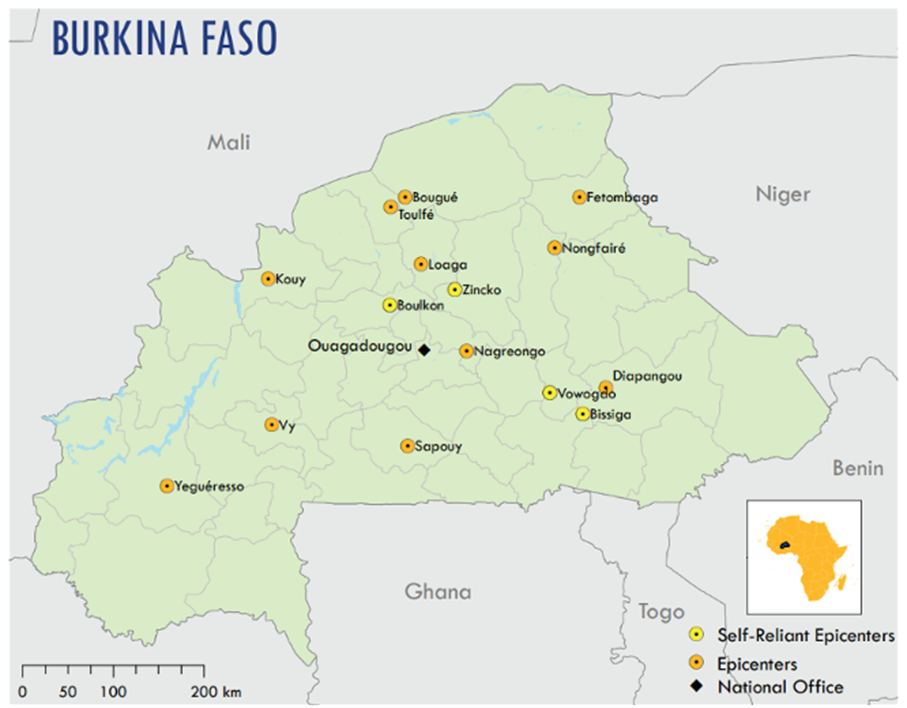
Together with the village communities, 12 independent epicenters have already been set up, reaching a total of around 282,000 people. The programs and infrastructure developed there – including health stations, banks, and schools – are now being successfully continued by the local population through their own efforts and without external funding.
Our area of operation in Burkina Faso:
Project “Knowledge & Change”: Climate protection and agricultural education
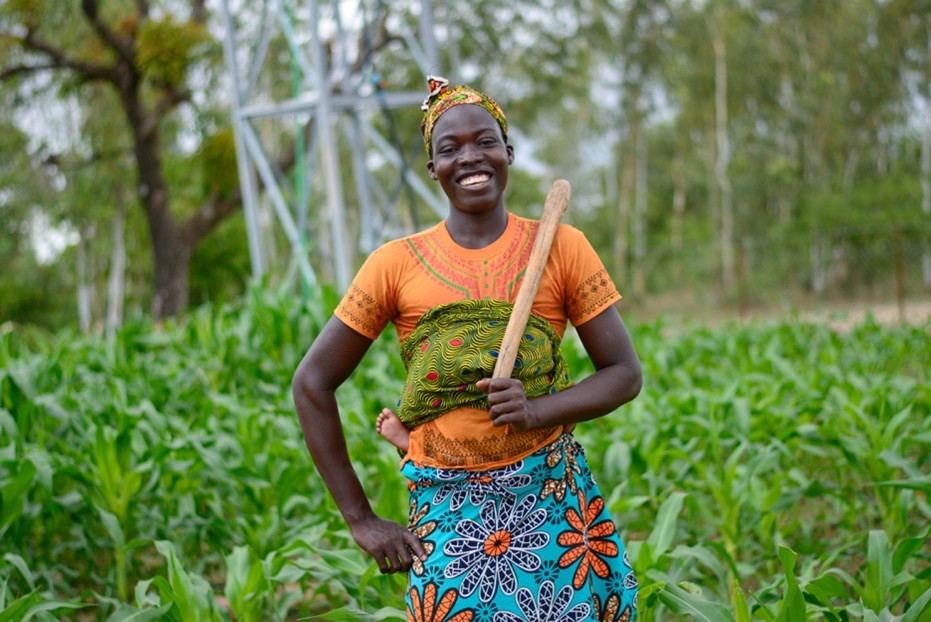
The municipality of Arbollé in the northern region of Burkina Faso is one of the poorest areas in the country, with around 71% of the population living in poverty. Agriculture is the main source of livelihood, yet despite the great motivation and energy of the largely young population, the yields are not sufficient to cover their own needs.
Young people face major challenges:
- Increasing soil depletion and pest infestation due to climate change and structural weaknesses in agricultural management
- Limited and traditional agricultural knowledge about modern, sustainable farming methods hinders necessary innovations in the agricultural sector
- Lack of financial resources for necessary modernization and infrastructure investments in the agricultural sector
The project, “Knowledge & Change,” funded by The Hunger Project Switzerland, empowers people where help is most urgently needed. The focus is on empowering the local population: to overcome poverty, hunger, and the impacts of climate change through their own efforts. The participatory implementation involves community organizations, local authorities, and media to ensure the sustainability of the measures even after the project has ended.
With a focus on young people, and in particular on women, effective solutions are implemented through the following activities:
- Awareness campaigns, training, and the establishment of processing facilities for agricultural products
- Access to financial resources through microcredits
- Support in sustainable technologies

- Increased agricultural productivity
- Increased and diversified income
Our training concept functions like a knowledge chain with the goal of broad local anchoring: together with local authorities and communities, we first raise awareness among 2,500 participants. Local “mobilizers” are then trained to pass on their knowledge of sustainable farming, processing, and climate adaptation to 300 young smallholder farmers. These young farmers, in turn, share their newly acquired knowledge within their villages. This creates a sustainable ripple effect that increases agricultural productivity across the entire region and makes communities more resilient to the effects of climate change.
The “Knowledge & Change” project opens new perspectives and empowers people to become self-sufficient in the long term. Thanks to the close involvement of the communities, the project has an impact far beyond the direct target group: a total of over 1.7 million women, men, and children in the region benefit from the positive effects of the project.